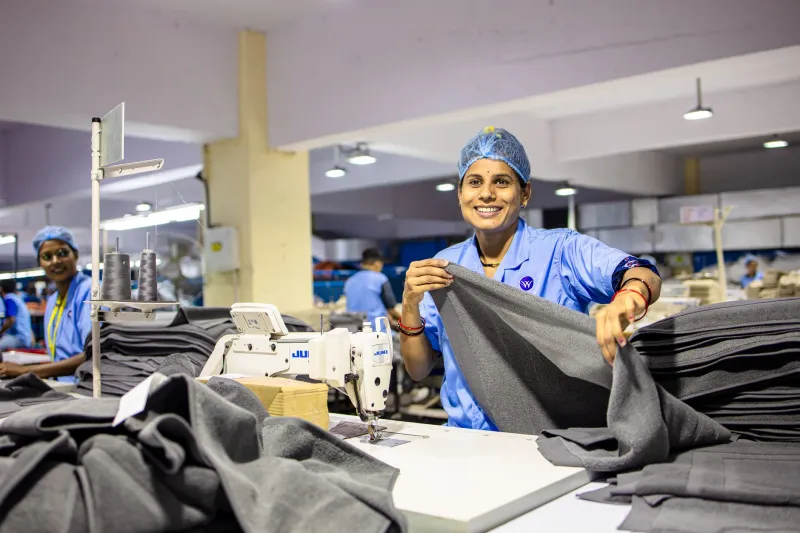
The Sourcing Gap: How Uniform Supply Chain Fragility Is Quietly Threatening Institutional Readiness in 2025
In the spring of 2020, procurement professionals across virtually every industry discovered, with considerable urgency, how dependent their organizations had become on supply chains they had never been required to think about carefully. Personal protective equipment was the most visible casualty of that moment—but the disruption extended far beyond medical supplies. Institutional uniforms, school apparel, and professional workwear programs were quietly affected in ways that most organizations are still working to resolve.
Five years later, the uniform supply chain has stabilized in some respects and fragmented further in others. Lead times that were once measured in days are now frequently measured in weeks. Fabric categories that were once reliably available have become subject to periodic shortages. And geopolitical pressures on key manufacturing regions—most notably in Southeast Asia and South Asia, where the majority of institutional garment production is concentrated—have introduced a new layer of unpredictability that procurement teams are only beginning to model into their planning frameworks.
For organizations that depend on consistent, timely uniform sourcing—schools, healthcare systems, hospitality groups, security firms, municipal agencies—this fragility is not a theoretical risk. It is an operational reality with measurable financial consequences.
How the Post-Pandemic Hangover Became a Structural Problem
The initial supply chain disruptions of 2020 and 2021 were widely characterized as temporary—a shock to the system that would resolve itself as global manufacturing resumed normal operations. That characterization proved overly optimistic.
Several structural changes that emerged during the pandemic period have persisted:
Consolidation among uniform manufacturers. Smaller and mid-tier garment manufacturers, unable to sustain operations during extended shutdowns, exited the market or were absorbed by larger competitors. The result is a more concentrated supplier landscape with less redundancy and fewer alternatives when primary suppliers encounter capacity constraints.
Persistent raw material volatility. Cotton prices, polyester feedstock costs, and specialty fabric availability have remained volatile well beyond the initial disruption period. Organizations that locked in pricing assumptions based on pre-2020 benchmarks have found those assumptions increasingly unreliable.
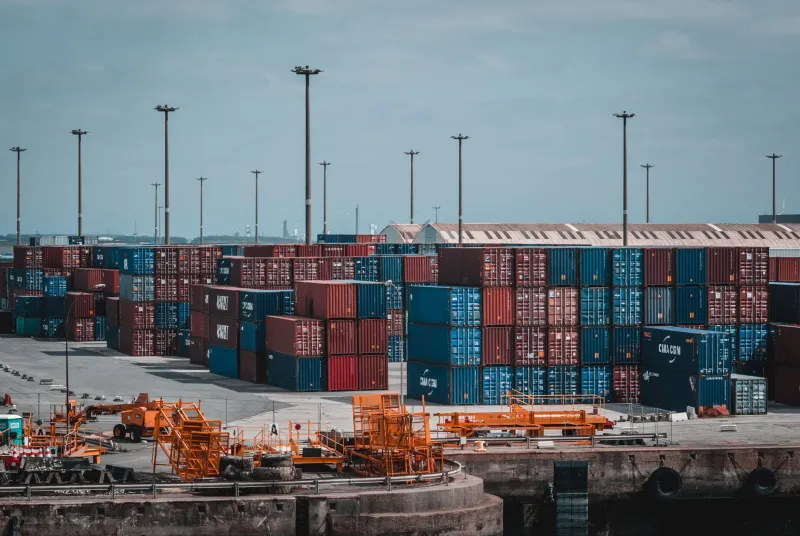
Shipping and logistics unpredictability. Port congestion, container shortages, and carrier pricing fluctuations—all of which peaked during 2021 and 2022—have moderated but not normalized. International shipping timelines carry a margin of uncertainty that was not present before the pandemic.
Geopolitical risk concentration. A significant proportion of institutional uniform production is concentrated in a small number of countries—Bangladesh, Vietnam, India, and China among the most prominent. Political instability, trade policy shifts, labor disputes, and natural disasters in any of these regions can propagate rapidly through the supply chains of organizations that have not built geographic diversification into their sourcing strategy.
What Delayed Deliveries Actually Cost
When procurement teams discuss supply chain risk in the context of uniforms, the conversation often focuses on the direct cost of replacement orders—the premium paid for expedited shipping, the higher unit cost of small-batch emergency purchases, the administrative burden of managing a sourcing crisis. These costs are real, but they represent only a fraction of the total financial exposure.
Consider the downstream consequences of a significant uniform delivery failure:
Operational non-compliance. Organizations in regulated industries—healthcare, food service, security, transportation—may face compliance failures if employees cannot be appropriately uniformed. In some contexts, this translates directly into regulatory penalties or operational shutdowns.
Brand and reputational exposure. Customer-facing organizations that cannot maintain consistent staff appearance during a uniform shortage experience a tangible degradation in brand presentation. The effect is difficult to quantify precisely, but customer perception research consistently demonstrates that visual inconsistency in staff appearance correlates with reduced trust and satisfaction scores.
Recruitment and onboarding friction. New hires who cannot be uniformed promptly may experience delayed deployment, reduced first-day confidence, and a diminished impression of organizational competence—all of which have implications for early-tenure retention.
Administrative cost accumulation. Managing a uniform sourcing crisis consumes procurement staff time, management attention, and vendor relationship capital that would otherwise be directed toward strategic priorities.
When these downstream costs are factored into the analysis, the true cost of supply chain disruption frequently exceeds the direct procurement expenditure by a significant margin.
The Contingency Planning Gap
Despite the clear and well-documented risks, a striking proportion of institutional procurement teams operate without formal contingency plans for uniform supply disruptions. This is not a failure of awareness—most procurement professionals understand that supply chains carry risk. It is a failure of prioritization: uniform sourcing has historically been treated as a low-complexity, low-risk procurement category, and that assumption has not been systematically revisited in light of post-pandemic realities.
Building a functional contingency framework does not require a complete overhaul of existing procurement processes. It does require deliberate attention to several key variables:
Lead time mapping. Document the actual lead times—not the theoretical minimums—for each garment category in your uniform program, under normal conditions and under constrained conditions. This baseline is essential for accurate planning.
Supplier diversification assessment. Evaluate whether your current uniform sourcing is concentrated with a single supplier or a small group of suppliers operating in the same geographic region. Concentration of this kind is a risk factor that can be partially mitigated through deliberate diversification.
Minimum viable inventory standards. Establish a defined threshold for each garment category below which your organization will initiate a reorder, regardless of the scheduled procurement cycle. This buffer does not need to be large—typically four to six weeks of anticipated consumption—but it must be maintained consistently.
Alternative supplier identification. Before a crisis occurs, identify at least one alternative supplier for each major garment category in your program. Establishing a preliminary relationship—even without a committed purchase—significantly reduces response time when a primary supplier encounters difficulties.
Communication protocols. Define in advance how your organization will communicate with employees and operational managers in the event of a uniform supply delay. Transparency during sourcing disruptions preserves trust and reduces the improvised responses that compound visual inconsistency.
Procurement Strategies for a Fragile Sourcing Environment
Beyond contingency planning, organizations can take proactive steps to reduce their exposure to supply chain volatility without resorting to the operationally problematic strategy of excessive stockpiling.
Extend procurement lead times deliberately. If your organization currently places uniform orders eight weeks before the anticipated need date, consider extending that window to twelve or sixteen weeks. This simple adjustment absorbs a significant portion of the variability that currently creates crisis conditions.
Negotiate supply commitments rather than spot purchases. Organizations that purchase uniforms on a transactional, as-needed basis have no priority claim on supplier inventory during constrained periods. Negotiating annual or multi-year supply agreements—even without minimum purchase commitments—establishes a relationship that typically translates into preferential treatment when capacity is limited.
Standardize garment specifications where possible. Programs with highly customized garments—unique fabric blends, proprietary color specifications, complex embellishments—are more vulnerable to supply disruption than programs built around widely available specifications. Where customization is not essential to brand identity, standardization reduces sourcing risk.
Engage your supplier as a strategic partner. Suppliers who understand your organization's operational calendar, compliance requirements, and tolerance for disruption are better positioned to provide early warning of potential supply constraints. This kind of intelligence is available only within a relationship built on transparency and mutual investment.
Building Resilience Without Overbuilding Inventory
The temptation during periods of supply chain anxiety is to resolve uncertainty through accumulation—to order more than is needed and store the excess as insurance. This approach carries its own costs: capital tied up in idle inventory, storage requirements, garment degradation, and the risk of obsolescence if uniform specifications change.
Resilience, properly understood, is not about holding more inventory. It is about holding the right inventory, sourcing from a sufficiently diversified supplier base, planning with realistic lead time assumptions, and maintaining the supplier relationships that provide early visibility into emerging constraints.
For organizations ready to assess their current exposure and build a more defensible sourcing strategy, the time to act is well before the next disruption makes the urgency unmistakable. At Amritha Uniforms, we work with institutional clients to build procurement frameworks that are both operationally practical and genuinely resilient—because a uniform program that cannot be reliably delivered is a program that cannot fulfill its purpose.